“We’re Sorry, But We Can’t Help You.”
It’s probably the last thing you’d expect to hear from a company whose job is protecting concrete structures.
But sometimes, it’s the only honest answer.
Moisture Vapour Testing when there is a visible issue is not going to provide you with any good news

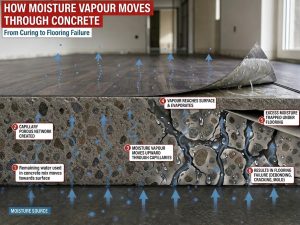
Once the floor covering has been installed and excess moisture is trapped inside a concrete slab, there is very little anyone can do without significant disruption, cost and possibly delays.
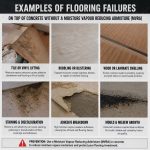
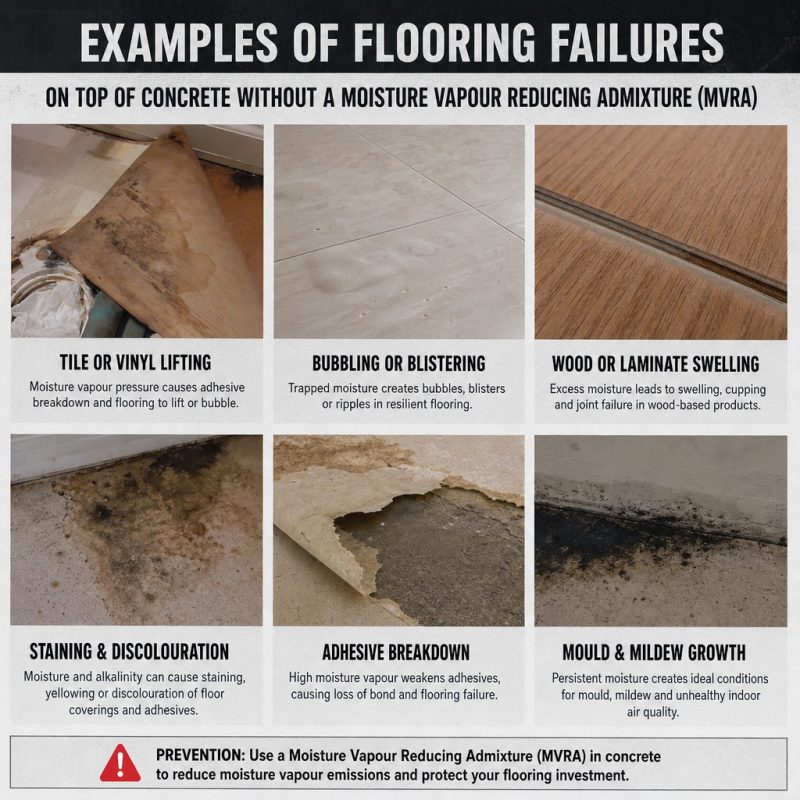
The flooring begins to fail.
- Adhesives can soften or break down.
- Moisture may cause bubbling, lifting or debonding.
- Mould starts to appear underneath the flooring and will start to make it’s way up your walls and into your air
The building owner or apartment owner is left dealing with remediation, investigations, lost time and frustrated occupants / users.
At that point, the concrete has already been placed. And the performance of any coating on top of the concrete is ultimately limited by the quality of the substrate it’s bonded to.
The opportunity to prevent the problem has passed.
 Prevention Is the Only Real Solution
The most effective way to manage moisture is before the concrete is poured & not after the holding point for this stage of construction.
By incorporating moisture vapour protection directly into the concrete during batching, the slab itself becomes part of the long-term solution.
Instead of relying solely on surface-applied products after construction, the concrete is designed to resist moisture movement from within…from day one.
That’s why proactive specification is so important.
The Cost of Waiting
Every flooring failure starts with a decision made much earlier in the project. And waiting until moisture becomes visible usually means the damage has already occurred.
By then, the conversation has changed from prevention to rectification.
Unfortunately, rectification is almost always more expensive than prevention. And at a cost to the owner alone.
Our Goal Isn’t to Fix Failed Floors
At CLEVA CRETE, our goal is to make sure you never need to anyone because the flooring has started to fail.
We work with engineers, builders, concrete suppliers and asset owners before concrete is placed, helping deliver slabs that are designed for long-term moisture performance.
We have even set up pages of information to read specificalliy for each role in a project;s process
Because while we’d love to help everyone who calls…
Sometimes the most honest answer is:
“We’re sorry, but once the flooring has been laid, the opportunity to stop moisture from within the concrete has already passed.”
The best time to solve a moisture problem and prevent flooring failure is before the concrete is poured.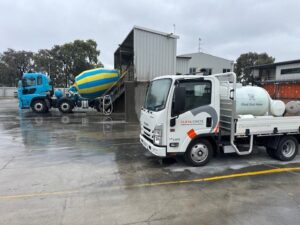
Before you choose a waterproofing system, ask yourself one question.
What do I want this concrete to be doing in 20, 50 or even 100 years?
If the answer is:
I don’t even want to have to think about the concrete or the flooring after the job is done.
Then the conversation shouldn’t start once the concrete is poured, it should start before the first set of plans are issued for approval.
Ask the difficult questions now, rather than answering difficult questions after handover.
The decisions made at the design stage will determine the performance of that concrete for decades to come.
Talk to us about our admixtures. Ask the questions, request a specification guide. becuase every durable structure begins with someone willing to ask, “Can we do this better?”
Get your concrete right the first time so you can Set and Forget